Newsletter Subscribe
Enter your email address below and subscribe to our newsletter

 ByJohn A
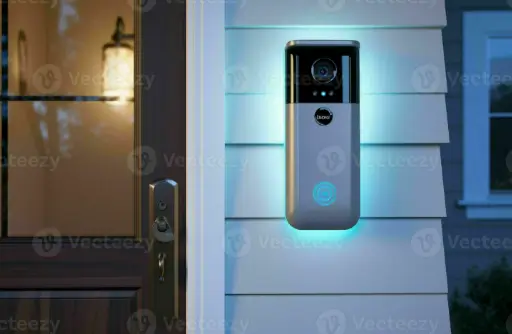
AI powers smart doorbells by performing facial recognition, motion tracking, and gait analysis to identify individuals and prioritize alerts. Real-time analysis converts basic notifications into context-aware signals, reducing false positives and enabling tailored responses. Privacy governance emphasizes transparent data handling and user control, with data ownership resting with the user. When selecting features, consider motion accuracy, autonomy-safe alerts, ecosystem compatibility, secure updates, and the risk of cloud dependence, inviting a careful evaluation of trade-offs.
Modern doorbells leverage artificial intelligence to interpret and respond to real-world events. They deploy face recognition and motion tracking to distinguish individuals and movements, enabling targeted responses. Algorithms assess silhouettes, gait, and proximity, prioritizing alerts while reducing false positives. Systematic data processing supports privacy controls and configurable thresholds, ensuring accountable automation. This framework emphasizes autonomy, security, and user empowerment through intelligent, transparent sensing.
Real-time detection elevates doorbell alerts from generic notifications to targeted, context-aware security signals. The system analyzes ongoing events, distinguishing motion patterns from ordinary activity and prioritizing potentially risky incursions. This enables alert customization, allowing users to tailor sensitivity, notification channels, and response protocols. The approach reduces false positives while preserving rapid, actionable responses for proactive guarding.
See also: How AI Is Used in Server Capacity Planning
The shift from real-time detection to privacy governance centers on how data is collected, stored, and used by smart doorbells.
Governance emphasizes transparency, minimized data collection, and clear retention policies.
Users should understand privacy controls embedded in devices and apps, while recognizing data ownership remains with individuals.
Robust standards foster accountability, mitigate surveillance risks, and preserve freedom through informed consent and usable controls.
Selecting AI features for smart doorbell integration requires a disciplined assessment of capabilities, privacy implications, and user needs. The choice should emphasize motion detection accuracy, low false positives, and onscreen alerts that respect autonomy.
Evaluate how device integration aligns with existing ecosystems, ensuring interoperable data flows, secure updates, and clear user controls without unnecessary reliance on cloud processing or vendor lock-in.
Yes, they can operate in offline mode with local processing, depending on the device. In offline mode, data is processed locally, not streamed externally, preserving privacy and reducing latency, though certain features may require periodic internet access for updates.
Facial recognition accuracy on doorbells varies across demographics, with notable face bias observed in some datasets. Privacy tradeoffs arise as surveillance expands. The analysis emphasizes cautious deployment, transparency, rigorous auditing, and robust opt-out controls to protect individual freedoms.
Pet detection reliability is moderate; AI-powered doorbells can distinguish animals from humans inconsistently. Animal vs human misclassification persists due to lighting, pose, and size variability, limiting flawless reliability across contexts. Continuous improvement remains essential for robust performance.
Missed alert occurs when misidentification happens, prompting a cautious response; the doorbell’s claim is weighed against privacy concerns, potential bias, and liability. Such errors highlight tradeoffs between security, freedom, and trust in automated surveillance.
Doorbells sometimes engage in data sharing practices with third-party integrations, though practices vary by manufacturer and region; consumers should review privacy disclosures. Third party integrations may transmit footage or analytics to service providers, impacting freedom and surveillance boundaries.
AI-powered smart doorbells elevate security by turning raw motion into context-aware alerts, using facial recognition, gait, and silhouette analysis to prioritize genuine threats and reduce false positives. Real-time detection shapes timely responses while preserving user control over data handling, retention, and privacy. Choosing features should emphasize motion accuracy, autonomy-safe alerts, and ecosystem flexibility to avoid cloud lock-in. In sum, tread carefully: “measure twice, cut once”—and balance convenience with transparent governance and user ownership.