Newsletter Subscribe
Enter your email address below and subscribe to our newsletter

 ByJohn A
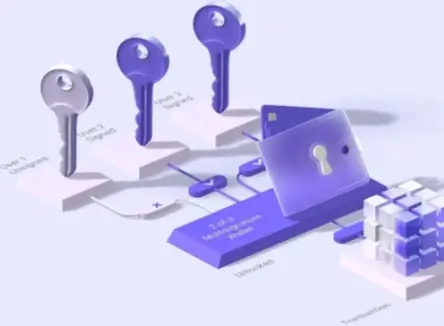
A multisignature crypto wallet requires multiple independent keys to authorize a transaction. It operates under an M-of-N scheme, balancing security with practicality. The approach spreads control, reduces single-point failure, and enables offline signing and distributed governance. Yet its effectiveness hinges on clear roles, verified vendors, and robust recovery guarantees. The concept is straightforward, but the implementation details raise questions that merit scrutiny before commitment. The next considerations may redefine what “secure” means in practice.
Multisignature wallets distribute control by requiring multiple independent keys to authorize a transaction, reducing the risk associated with a single compromised key. The design constrains adversaries and fosters resilience, yet it introduces coordination complexity and potential governance friction. For a freedom-minded user, two word discussion ideas emerge: multisig security. Critical assessment remains necessary, with practical considerations guiding robust, auditable deployments.
How do multisignature arrangements enforce collective control over a crypto wallet? Keys management comprises distributed key roles, threshold schemes, and clear authorization flows. M-of-N requires N signatures for execution, mitigating single-point failure yet introducing complexity. Authorization flows must be auditable and predictable. Emphasis on offline signing reduces online exposure, but verification remains essential for freedom-oriented users wary of centralized coercion.
See also: What Is a Market Order in Crypto?
In real-world deployments, multisignature wallets are adopted when operational resilience, distributed risk, and governance requirements surpass the capabilities of single-key systems. This approach enables next gen governance, cross chain custody, and mitigates multi party risk by distributing control.
Hardware wallet integration remains critical for secure key storage, while skepticism about centralized failure drives cautious adoption and rigorous auditing of participation thresholds.
Choosing the right multisig wallet hinges on clearly defined risk, governance, and operational requirements, then mapping those needs to specific wallet architectures and participation models.
A detached assessment emphasizes verifiable security properties, governance resilience, and recovery guarantees.
Choosing criteria prioritize modularity, auditable policies, and cross-checks.
Best practices include formalized signer roles, redundant key storage, and transparent, skeptical verification of vendor claims.
In sum, multisignature wallets distribute risk by requiring multiple keys to authorize a single move, aligning control with trust and operational realities. The approach enhances resilience against single-point failures, yet introduces coordination and key-management overhead. Notably, surveys show many wallets still rely on a small, centralized subset of signers, undermining decentralization. A 2023 study found 70–80% of real-world multisig breaches involved compromised custodial keys, underscoring the need for rigorous, auditable recovery and diversity of signers.